
Topping the list with an index of 136.5, Monaco is home to an affluent population. The principality’s limited landmass and its status as a tax haven drive up real estate costs. A lack of income tax attracts high-net-worth individuals, who further inflate prices for goods and services. For prospective residents, Monaco’s allure comes with a staggering price tag, making it inaccessible for most without considerable financial resources.
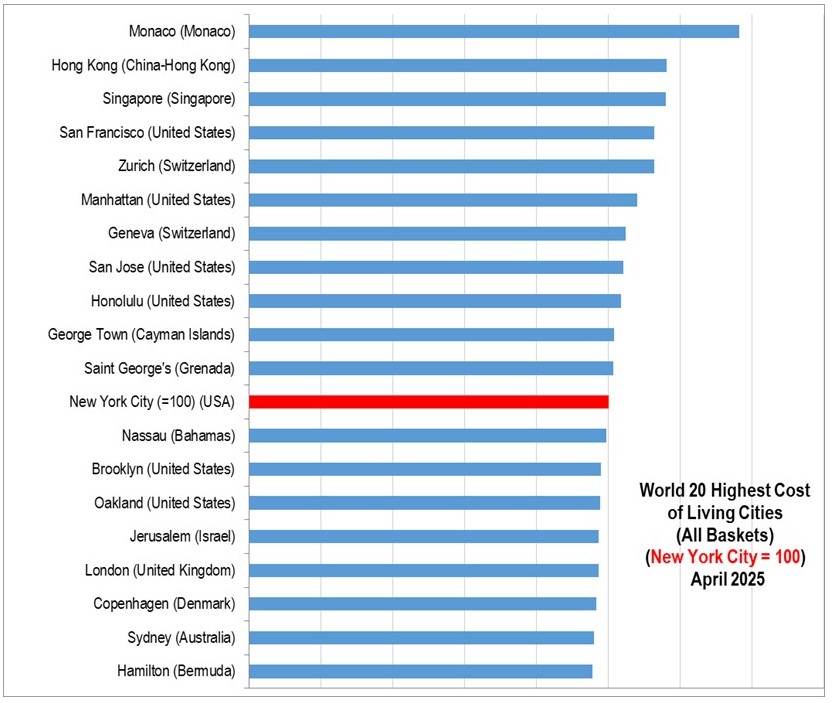
Hong Kong (116.1) and Singapore (115.8) rank second and third, epitomising high-density urban living. Hong Kong faces space constraints, compounded by geopolitical uncertainties that heighten demand for limited resources. Singapore’s rigorous urban planning ensures efficiency but escalates housing costs also due to limited space. For expatriates, these cities offer unparalleled economic opportunities but at the expense of steep housing and transport costs.
The United States dominates the list of the highest cost of living cities with 7 of the top 20 most expensive cities in the world. San Francisco (112.8), Manhattan (108), San Jose (104.1), and Honolulu (103.4) are all in the top 10. San Francisco and San Jose, bolstered by Silicon Valley’s tech dominance, grapple with surging housing demand amidst limited supply. Manhattan, the epitome of cosmopolitan allure, suffers from exorbitant rents and high service costs. Honolulu’s geographic isolation escalates import costs, influencing everything from groceries to fuel. For potential movers, these cities demand substantial incomes to match their high living standards.


 Expatriate International Cost of Living