
The global distribution of high cost cities in 2026 reflects a combination of economic structure and market constraints. Xpatulator’s latest rankings, benchmarked against New York City at 100, show that the most expensive locations are not randomly distributed. They are concentrated in markets where housing is scarce, services are labour intensive, and demand is supported by internationally mobile professionals.
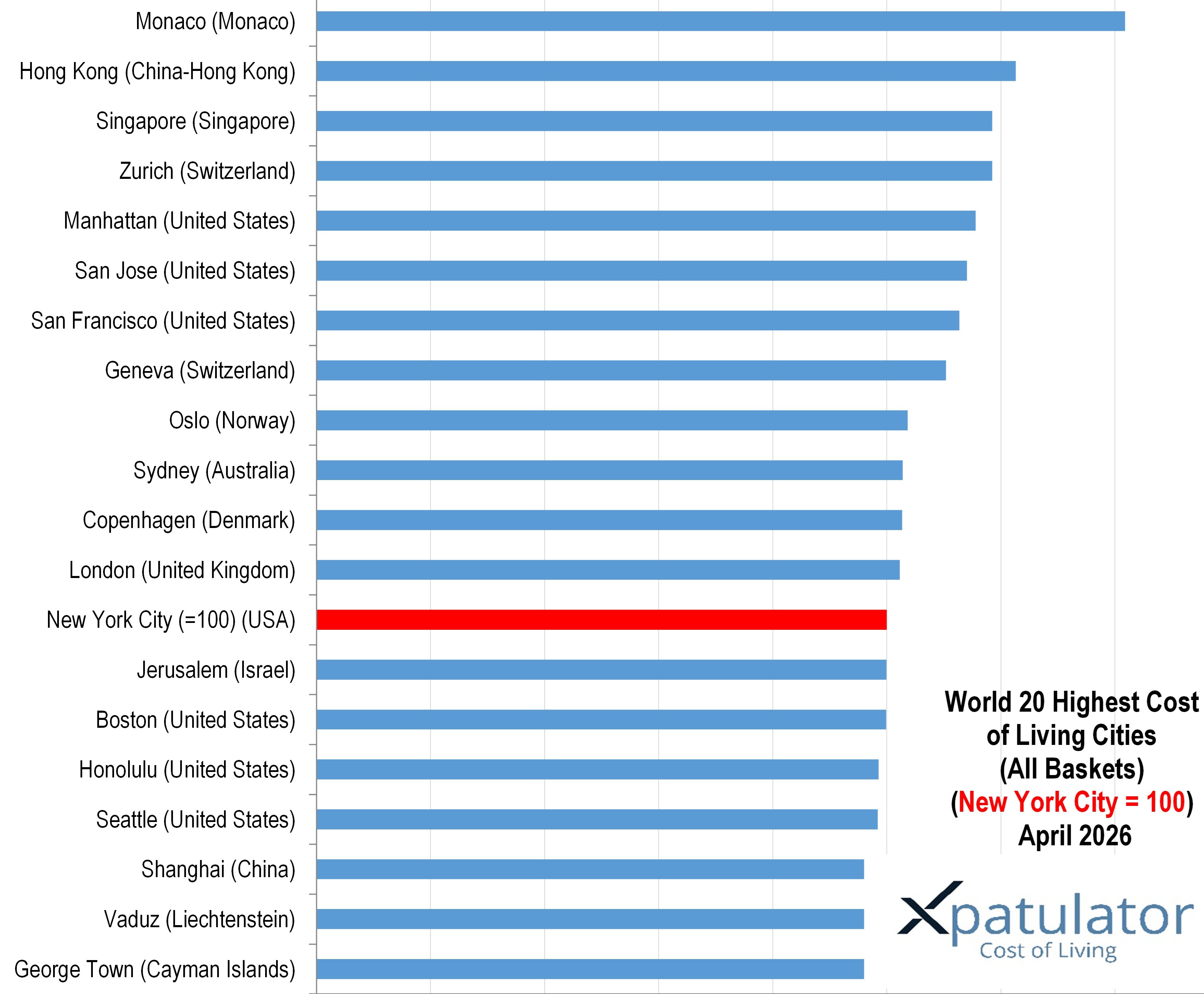
Monaco leads the ranking because its housing market is structurally constrained. Limited land and sustained global demand ensure that accommodation costs dominate household budgets. Hong Kong in China Hong Kong and Singapore follow closely, where density, regulatory frameworks, and strong demand for centrally located housing drive costs upward. In each case, the expatriate experience is shaped by the cost of securing appropriate accommodation, rather than by everyday consumer prices alone.
In Europe, Zurich, Geneva, Copenhagen, and London illustrate the interaction between high wages and high service costs. Labour intensive sectors such as childcare, healthcare, and hospitality reflect local wage structures, which raises the cost of living for expatriates. Oslo presents a similar profile, where high incomes translate into expensive services and leisure activities. These effects are amplified when local currencies strengthen against the United States dollar, increasing the converted cost for those paid in dollars.
The United States cities in the ranking, including Manhattan, San Jose, San Francisco, Boston, and Seattle, are defined by housing markets where demand is driven by high earning sectors. Even where other categories are relatively stable, rental costs can absorb a significant share of income. Honolulu adds a further dimension, where logistics and import costs raise the price of goods compared with mainland locations.
Smaller jurisdictions such as George Town in the Cayman Islands and Vaduz in Liechtenstein demonstrate how scale and import dependence can influence prices. In these markets, limited competition and high operating costs are reflected in retail pricing. Shanghai shows how expatriate choices can shift the cost profile. While the overall index may sit near the benchmark, selecting premium housing, international schooling, and private healthcare can increase living costs significantly.
For an individual earning United States dollars 100,000, the variation in purchasing power across these cities is substantial. In high index locations such as Monaco or Zurich, disposable income after housing and essential services may be significantly lower than in cities closer to the benchmark. This highlights the importance of evaluating salary offers in real terms, rather than relying on nominal comparisons.
Exchange rate movements and inflation trends contribute to year on year changes, but they do not fully capture the expatriate experience. Housing, education, and healthcare tend to be persistent cost drivers, and these categories often remain elevated even when headline inflation moderates. External factors, including geopolitical developments, can also influence insurance costs and supply chains, indirectly affecting the cost of living.
Comparing cost of living between locations provides a structured way to assess these differences. It enables individuals to estimate post housing disposable income and to make informed decisions about lifestyle adjustments. For global mobility specialists, it supports the design of assignment packages that maintain purchasing power and reduce the risk of dissatisfaction or financial strain.
Failing to account for cost of living differences can lead to unintended outcomes. A higher nominal salary in a high cost location may result in lower real income, requiring adjustments to housing, schooling, or discretionary spending. Over time, this can affect both financial stability and overall quality of life.
Use Xpatulator’s Cost of Living Calculators and Tools for informed decision-making about the cost of living and the salary, allowance, or assignment package required to maintain the current standard of living.


 Expatriate International Cost of Living