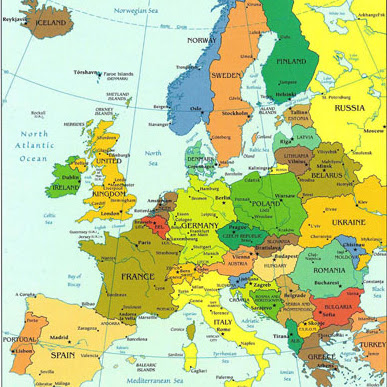
 The most expensive cities in Europe for expatriates to live in: Zurich (Second most expensive in the world); Geneva; Monaco; London; Oslo. Continue reading
Search
-
Join 1,825 other subscribers
Blogs I Follow
Top Posts & Pages

The most expensive cities in Europe for expatriates to live in: Zurich (Second most expensive in the world); Geneva; Monaco; London; Oslo. Continue reading
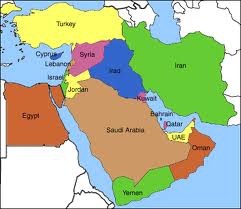 Highlights

Which cities / countries drop in the ranking, and which moved up? Continue reading
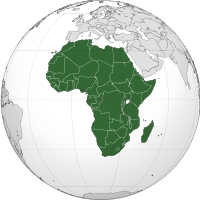 Luanda as the most expensive city in Africa has an overall cost of living index of 131.69 compared to New York with an index of 100, and Tokyo with an index of 139.89. Luanda’s cost of living index is similar to cities such as Hong Kong, Caracas, and Yokohama. Continue reading

Tokyo is the most expensive city in the world with an overall cost of living index of 139.89 compared to New York with an index of 100. Tokyo is followed by Zurich, Geneva and Luanda in the October 2012 world rankings.
Tokyo is the most expensive city mainly because of the historical strength of the Japanese currency, the high population density, the high level of salaries, and the lack of resources which result in a high proportion of imports. Particularly expensive in Tokyo are the following basket groups groceries, healthcare, housing, and transport. Benchmark price in a major international retail store for 1 kg apples is $7.08, 1 kg boneless, skinless, chicken breast $11.91, 1 kg cheddar cheese $18.22, and 1 L full cream milk $2.73.
Benchmark price for a private practice doctor visit for an uninsured patient is $125, and a private hospital stay per day including nursing care, medications, diagnostic tests, food, and related costs is $3,675. Benchmark rental for a secure upmarket unfurnished apartment (3 bedrooms) is $6,293 in a central location, and $3,209 in a suburban location, per month, excluding utilities.
To provide an assignee, sent from a low cost of living country to a more expensive country, with a similar purchasing power to what they have in their home country, requires an adjustment to their assignment salary. The amount of adjustment depends on which country they come from. The larger the difference in cost of living, the larger the adjustment required to ensure a similar level of purchasing power in the host country.
The cost of living rankings are released every quarter and measure the comparative cost of living for expatriates in 780 locations, covering every country worldwide. The cost of living comparison uses local prices for defined quantities of the same goods and services at or near each location, which is converted to a single currency. The prices are grouped together into baskets and the cost of living index calculated for each of these.
Tokyo is the most expensive location in the world overall taking all elements of the cost of living into account. What makes Tokyo the most expensive place for expatriates is that it is particularly expensive for the items that consume the largest portion of an expatriates living costs. Household accommodation, which accounts for approximately 30% of a typical expatriate’s budget is the 4th highest in the world in Tokyo (Hong Kong is still most expensive for housing).
In Tokyo the benchmark rental for a secure upmarket unfurnished apartment (3 bedrooms) is $6,293 in a central location, and $3,209 in a suburban location, per month, excluding utilities. The second most costly basket in Tokyo is groceries, which accounts for 16.5% of a typical expatriates budget, and ranks 5th most expensive in the world. Benchmark prices in a major international retail store in Tokyo for 1 kg apples is $7.08, 1 kg oranges $4.80, 1 kg potatoes $4.92, 1 kg boneless, skinless, chicken breast $11.91, 1 kg cheddar cheese $18.22, and 1 L full cream milk $2.73.
If the housing, education, medical and transport baskets are excluded from the cost of living calculation, then Luanda ranks first with Zurich and Geneva, in second and third, placing Tokyo as the fifth most expensive place to live and Hong Kong 108th. Tokyo drops dramatically in ranking when the most expensive basket group – housing is removed, making it overall a much cheaper expatriate prospect when housing is provided by the employer. Luanda is particularly expensive for clothing, groceries, recreation and culture, and restaurants and meals out. A pair of branded men’s jeans costs approximately $113, a 1L full cream milk $2.93, a cinema ticket for 1 adult $13.17, a cappuccino $4.37 and a burger meal from an international franchise is $13.82.
Xpatulator.com Head of Client and Marketing Services, Denise McManus comments that: “Becoming an expatriate can be an exciting prospect but it can be overwhelming, you need to plan your move with the knowledge that your new salary will cover your cost of living and continue to maintain your standard of living. This is where we come in, we provide the information that multinational companies and the man on the street can use to calculate either what the cost will be to the company or the salary that the employee requires in the new location.“
For more about the most expensive places to live go here

Zurich in Switzerland is a cultural Mecca and renowned for being one of the most desirable cities to live in many a survey. It is also however one of the most expensive cities to live in, ranking in the top ten worldwide and in Europe, in the Xpatulator Cost of LivingRanking Survey for 2012, being surpassed only by Hong Kong and Tokyo respectively.
Costs in Zurich, like the rest of the nation are particularly high for groceries, restaurant meals out, hotels and transport, for example a cappuccino costs around 4.59 CHF / 4.95 USD, while a litre of petrol / gasoline around 181 CHF / 1.95 USD. It is also compulsory for expats to pay taxes, insurances and licenses, making life in this idyllic country extremely expensive, but comparatively it is also known for its high salaries, high buying power and high quality of life.
As in most of the cities we have covered to date, Zurich is no different when it comes to high costs, high competition and limited availability of accommodation. The Household Accommodation Basket has a weighting of 30%, this means that an expatriate who earns, for example 10,000 would typically spend 3,000 (30% of 10,000) on housing. Utilities are also paid out of an expats salary and can cost up to 10% of the cost of the rental amount.
Rental prices for a secure upmarket apartment in the city centre range from 2,400 CHF / 2,588 USD for one bedroom, while a 3 bedroom family apartment can cost up to 4,400 CHF / 4,700 USD per month. Suburban accommodation is much cheaper and ranges from 1,400 CHF / 1,500 USD for one bedroom, while a 3 bedroom family apartment can cost up to 2,500 CHF / 2,700 USD per month.
Interestingly the taxes you pay are correlated directly to where you live, if you live in a prosperous area you will pay a lower tax rate, the prosperity is what drives the rate down in that the higher the concentration of companies and wealthy people in a location the lower the rate, thereby benefiting those individuals who are not as well-off. The resulting impact is that as much as accommodation is expensive in cities, the tax rate is less in comparison to outlying areas.
Grocery costs in Zurich are extremely high, making this city one of the most expensive in the world.
Food prices range from:
1kg of apples – 4.53 CHF / 4.89 USD,
1kg medium sized potatoes – 2.69 CHF / 2.91 USD,
1 dozen eggs – 6.54 CHF / 7.06 USD,
1 500g white bread – 2.83 CHF / 3.05 USD,
1 litre full cream milk – 1.45 CHF / 1.57 USD
1kg boneless, skinless chicken breast – 29.10 CHF / 31.41 USD,
1.5 litre bottle of water – 1.10 CHF / 1.14 USD.
A good idea is to shop around and not in the City Centre as this is the most expensive place for goods, go to the Shopping Malls around Zurich for the best prices. At the Supermarkets buy unpackaged goods, which are much cheaper and avoid pre-sliced, pre-washed and pre-packaged fruits and vegetables. You can drink the tap water as it is pure and safe, so leave the bottled water in the shops. Meat is very expensive, so either buy conservatively or buy the meat that is in the discounted areas. This meat is close to the expiry date but if frozen at home it can last longer. Discounts are also available for toiletries and the Supermarket branded products are usually cheaper.
Education for expats is average, however expatriate international school costs can range from 30,000 USD for primary schooling to 35,000 USD for Secondary.
The public schools in Switzerland are of a very high standard and each canton has its own head of education, there is also a Swiss Federation for Private Schooling. So look around before you head straight into the expensive international schools.
A three course meal out for two in a mid range restaurant will also cost up to 90 CHF/ 97 USD, while a burger meal similar to McDonalds will set you back almost 12.20 CHF / 13.17 USD and a Coke / Pepsi (0.33l) 4.23 CHF / 4.56 USD. The price of a monthly membership to a Fitness Club will cost 90.20 CHF / 97.37 USD per month.
Transportation costs are high for example a one way ticket on local public transport 3.97 CHF / 4.28 USD. The normal taxi tariff starts at 6.86 CHF / 7.40, while a one hour standard taxi tariff is 52.65 CHF / 56.82 USD. One litre of petrol / gasoline will set you back by 1.81 CHF / 1.95 USD. Many people opt to travel via bicycle to and from work as it is so much cheaper, a yearly bike licence will cost up to 10 CHF / 10.78 USD, it is obligatory and covers you for any personal liability. If you do commute, look out for discounts and special fares.
Exchange rates as at 16 September 2012 : 1 CHF = 1.07926 USD.
Personalized cost of living indexes for Zurich in Switzerland are based on the basket groups and comparison location(s) selected in the Calculators.
In terms of the hardship people are likely to experience, assessed in global terms, Zurich in Switzerland is ranked as minimal hardship with a hardship index of 10%.
Personalized hardship index premiums for Zurich in Switzerland are based on the comparison location(s) selected in the Calculators.
Denise is an Expat and Marketing Manager at http://www.xpatulator.com/ a website that provides cost of living index information and calculates what you need to earn in a different location to compensate for cost of living, hardship, and exchange rate differences. The complete cost of living rank for all 13 baskets is available here.
The combination of North and South America cost of living rankings has the oil rich countries of Venezuela and Brazil as the most expensive places to live for expatriates in the Americas.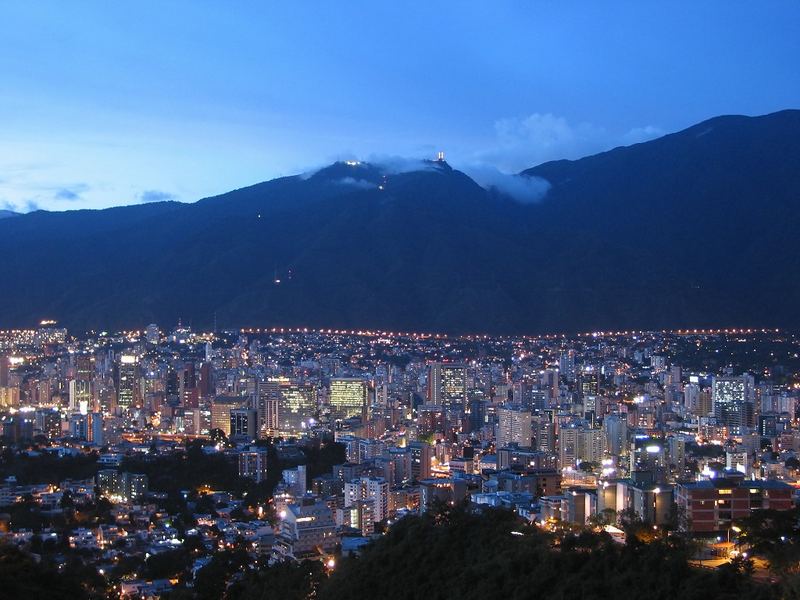
Caracas is the capital and largest city of Venezuela. Caracas is the Americas most expensive place to live in July 2012, both overall and based on the cost of living excluding the housing, education, healthcare and transport baskets. Sao Paulo and Rio de Janeiro in Brazil follow a close 2nd and 3rd. Overall Caracas, is the 5th most expensive place to live in the world and has an overall cost of living index of 135,7. Important industries in Caracas include chemicals, textiles, leather, food, iron and wood products. Caracas is a regional centre for the distribution of products.
The economy of Venezuela is dominated by the petroleum sector accounting for roughly a third of GDP, around 80% of exports and more than half of government revenues. Gold, diamonds and iron ore are mined as well. Venezuela contains some of the largest oil and natural gas reserves in the world and consistently ranks among the top ten crude oil producers in the world.
Venezuela is a country ruled by politics. Irrespective of the socialist system instituted by President Hugo Chávez, with vigilant price controls for a range of basic products and a wave of nationalizations and expropriations, life in Caracas perhaps more than in any other Latin American capital, is still defined by its reliance on one volatile commodity: oil.
Despite oil prices being relatively low, oil-export proceeds create arbitrage opportunities for everyone in the community. The abundance of oil further attracts companies that want to extract it, regardless of the politics. Hence the influx of these people from as far as China and Russia, including representatives from other multinational groups selling products in Venezuela, explains why even a basic apartment in Caracas can be rented for as much as $4,000 a month, with rents in some districts running to double or triple that amount.
Caracas also differs from cities elsewhere in the hemisphere in that Venezuela operates a stringent system of controls of the currency, the optimistically named bolívar fuerte, or “strong bolívar.”
*On January 2010, the government of Venezuela created a two-tiered official exchange rate system. Imports designated as “non-essential” receive a rate of 4.3 bolivares per dollar, and “essential” goods are exchanged at a rate of 2.6. There is also a third and unofficial exchange rate in the black market valued at around 6.8 bolivares per dollar (March 2010).
The Venezuelan government decides what “essential” goods qualify for the 2.6 rate. They include imports for sectors related to food, health, education, equipment, and technology; remittances to relatives settled abroad; students’ academic expenses abroad; expenses related to health, sport, culture, and scientific investigations; payments to retired and resident pensioners abroad; and currency conversions related to diplomatic activities. Full details (in Spanish) can be found through the Central Bank of Venezuela.
* Information from XE (http://www.xe.com/currency/vef-venezuelan-bolivar-fuerte?r=1#additionalinfo)
Caracas is particularly expensive for clothing, education and groceries. For example a litre of milk costs around 1.60 USD and a loaf of white bread 1.80 USD in Caracas compared to 0.90 GBP / 1.40 USD and 1.03 GBP / 1.62 USD respectively in London. Not everything in Caracas is expensive, while a litre of petrol costs around 0.13 USD in Caracas, it can cost around 1.02 USD in New York.
The cost of living in Caracas in Venezuela is very high compared to other places with the overall cost of living being determined using the prices for defined quantities of the same goods and services across 13 Basket Groups of 780 places.
Alcohol & Tobacco costs are very high compared to other places sitting at 57th more expensive in comparison to 780 other places, for items such as alcohol at a bar, beer, locally produced spirit, whiskey, wine (where alcohol is legally sold) and tobacco related products.
Domestic Beer can cost up to $2.60, while Imported Beer is approximately $4.30 and a pack of Marlboro Cigarettes will set you back almost $5.
The cost of Clothing is also very high and Caracas is the 4th most expensive for items such as business suits, casual clothing, children’s clothing, coats, evening wear, footwear, hats, shoe repairs and underwear.
A ladies suit consisting of a blazer/jacket, summer dress, pantyhose and a pair of shoes can cost between $250 – 730 while a man’s suit including blazer/jacket, shirt, jeans, socks and a pair of shoes will set you back between $350 – 430. A pair of Levis can cost up to $100 and a plain Zara or H&M summer dress ranges up to $80 – 100.
When it comes to shopping you can find the same quality clothes and appliances as in the US, but it can cost up to three times the price.
Communication costs are average compared to other places for various costs such as call charges, home telephone rental, Internet connection, mobile data costs, mobile phone contract and service provider fees. There are 389 places that are more expensive, and 390 places that are less expensive for communication.
A Prepaid Mobile Tariff for local calls (including no discounts or plans) comes to $.042 per minute, while the internet (6Mbps, with unlimited data via Cable/ADSL) can cost approximately $49 per month.
Education costs are very high compared to other places for items such as creche / pre-school fees, primary school fees, high school fees and tertiary study fees. There is 1 place that is more expensive.
An international school can cost approximately the following per Year group for annual tuition and often there is a one-time capital fee that must be paid :
PreNursery – N-PK: $10,078;
Kdg.- grade 5: $18,076;
Grades 6-8: $22,481;
Grades 9-10: $23,473; and
Grades 11-12: $24,128.
Furniture & Appliance costs are very high compared to other places for items such as a DVD player, fridge / freezer, furniture, household equipment, iron, kettle, light bulbs, microwave, television, toaster, vacuum cleaner and washing machine. There is 1 place that is more expensive, of the 780 comparable places.
Grocery costs are the highest compared to all other 780 places for items such as baby consumables, baked goods, baking, canned foods, cheese, cleaning materials, cleaning products, dairy, fresh fruits, fresh vegetables, fruit juices, meat, oil & vinegars, pet food, pre-prepared meals, sauces, seafood, snacks, soft drinks, spices & herbs.
The price for a basket of 39 items ranges between $465 – 505, and these are on the increase. A 1.5 litre bottle of water can cost $2.00, a bottle of mid-range wine $15 and domestic 0.5 litre beer $2.20.
Healthcare costs are very high with Caracas sitting at the 6th most expensive place for general healthcare, general practitioner consultation rates, healthcare/medical insurance, hospital private ward daily rate and non-prescription medicine.
Household Accommodation costs place Caracas at the 27th most expensive for items such as accommodation, apartment, flat, house, villa, rent, electricity, household fuels, household gas, water, and local property rates / residential taxes / levies.
Basic Electricity, gas, water and garbage rates for a 85m2 Apartment can cost up to $86, while a house for rent in La Lagunita with a garden, pool, barbecue, service areas, electrified perimeter, closed street surveillance and daily maintenance can cost up to $11 600/month.
Comfortable neighbourhoods for expats to live in with a family, include Valle Arriba, Lomas de la Alameda, Campo Alegre and Santa Rose de Lima/Lomas de San Roman/Lomas de Tamanaco and la Lagunita. Other attractive areas comprise Altamira, and Los Palos Grandes as they are close to public transportation, goods and service stores, restaurants, cafes and business centers and are also considered safe areas to live in.
Las Mercedes can be noisy, but it is safe with all the amenities in walking distance. Most children play in areas set aside for them in apartments rather than in parks. There is one large, safe park in the city, Parque del Este, which is near the neighborhood La Florida.
For pricing and availability use a real estate agent that can help you find the right area to live in – www.porlapuerta.com.
Miscellaneous costs for items such as dry cleaning, general goods, general services, linen, magazines, maid, newspapers, office supplies, postage stamps and stationery place Caracas at 81 more expensive, e.g. a subscription to the Economist for 51 weeks can cost up to $337.
Personal Care for items such as cosmetics, hair care, moisturizer, nappies, pain relief tablets, shampoo, soap, sun block, toilet paper and toothpaste, are very high with 47 places more expensive.
A 2 in 1 shampoo can cost $12, while woman’s cosmetic that cost the equivalent of $3 in Europe can cost $11 in Caracas.
Recreation and Culture costs place Caracas at 49th most expensive for items such as books, camera, cinema tickets, fitness/health club membership, sports goods and theatre tickets.
A monthly Club Fitness membership can cost $57 for 1 adult while a cinema ticket for an International movie can cost up to $8.
Restaurants, Meals Out and Hotel costs are very high compared to other places for items such as a business dinner, dinner at a family restaurant (non-fast food), 4 star and 5 star hotel rates and take away meal (fast food). There are 6 places that are more expensive.
A reasonable restaurant can cost between $46 – 50 for a dinner including a starter, main dish and a desert per person. The cost of a double room at a 5 Star hotel $194 – 215, a cappuccino $21.0 and a Combo McDonalds Meal $8.53.
At 44th most expensive Transport costs are very high compared to other places for items such as car hire purchase, car insurance, car lease, car maintenance, car rental, car service, diesel, petrol, tyres and public transport.
A round trip ticket on the Metro de Caracas will cost about 75 cents — pricier than Mexico City’s system, but a lot cheaper than some of the high dollar systems you find in the U.S.
A normal train ticket one way can cost $0.55 while a monthly pass can cost up to $14.
A 5km/3mile taxi ride can cost between $6 – 6.97, while the normal 1km tariff is $4.25. Gasoline will cost you up to $0.14 per litre. Public transportation is fairly accessible almost anywhere but can be challenging with children in tow.
Personalized cost of living indexes for Caracas in Venezuela are based on the basket groups and comparison location(s) selected in the Calculators.
In terms of the hardship people are likely to experience, assessed in global terms, Caracas in Venezuela is ranked as extreme hardship with a hardship index of 40%.
Cost of Living Rank – The Americas Locations – Overall Cost of Living & All Baskets (Highest to Lowest):
4. USA, New York (Manhattan) NY
6. USA, New York (Brooklyn) NY
10. Canada, Edmonton
Further interesting reading on the rising costs in Caracas can be read here:
http://www.bbc.co.uk/news/world-latin-america-17527939
Denise is an Expat and Marketing Manager at http://www.xpatulator.com/ a website that provides cost of living index information and calculates what you need to earn in a different location to compensate for cost of living, hardship, and exchange rate differences. The complete cost of living rank for all 13 baskets is available here.

It is not surprising that Hong Kong is sitting at the top of the list of most expensive places to live in the world. Why? While Hong Kong used to be a major manufacturing centre before WWII this only contributed towards 9% of the countries GDP, today 90% of this comes from the service sector. Hong Kong has one of the world’s largest financial hubs, as well as an important trade and cultural hub. It is considered as one of the Four Asian Tigers in terms of its rapid industrialisation and impressive growth rates. The Hong Kong dollar is also linked to the US Dollar, ensuring its strength even in the economic crisis of today, with the Hong Kong Stock Exchange ranked at 6th in the World
In 1997 Hong Kong rejoined main land China, which resulted in it becoming more international, and a popular holiday destination. As a former British Colony, Hong Kong has always been fashionable with expats from Europe with its high standard of living and low tax rates resulting in an approximately 100, 000 expat community.
Expats however, will find most things are more expensive here than in their home country, especially if trying to maintain the same standard of living as experienced back at home. Hong Kong is ranked as the most expensive place to live in the world according to Xpatutualor.com’s latest cost of living rankings for July 2012.
The cost of housing in Hong Kong is one of the largest contributors to the high cost of living mainly due to the shortage of land. It is approximately 5% more expensive than Tokyo based on the overall cost of living including household accommodation. Household accommodation comprises 30% of the overall cost of living index. A huge contributor to this cost is the lack of space, with the majority of the population residing in apartment buildings and housing enclaves.
Choice varies enormously, where on average a single-bedroom apartment of 500 sq ft in Happy Valley will cost you around $2 000, or for the same amount you can have a 3 bedroom village house in the New Territories. If budget is a concern, many expats live in communities such as Discovery Bay on Lantau Island, rather than living on Hong Kong Island. Even further out in the Mui Wo, Sai Kung or Cleanwater Bay prices are even lower, but you must be prepared to commute to work. These communities do have fully formed communities, which include schools. Only the wealthiest people get to live in the luxurious hilltop village which overlooks the China Sea.
The state also relies heavily on imported goods and products from Mainland China and other nations. Imported meat products, canned foods and fresh fruit and vegetables are very expensive and can cost twice as much in comparison to other Asian countries. Beverages such as wines, beers, tea, coffee and water, are all imported, making them expensive to purchase. Imports from China are however relatively less expensive than those from other Western countries. There are a number of supermarket chains in Hong Kong these include Wellcome and ParknShop. There are also Westernised supermarkets such as ParknShop International, where expats can find most products from their home countries, but be prepared to pay double or triple for the most basic item. The best advice is to find local wet markets where low cost produce and goods are available, and buy fresh fruit and vegetables once or twice a week to ensure quality and freshness.
Restaurants abound in the city and are roughly divided into East and West Style cuisine. The Western style restaurants are regarded as international and are therefore much pricier. To experience true bargains and the local eastern cuisine, go to one of the many tiny noodle bars, where you can get a dish for $3, while at the larger Cantonese style restaurants meals go for $10 a head.
Tea shops are easily recognisable by their huge shining brass kettles and supply piping hot or cold drinks for only $2. Alcohol at local shops is significantly lower than in cities such as Singapore, New York and London, however will be twice as expensive in the international hotels and trendy bars.
Transportation in Hong Kong is reliable, with Taxi’s and MRTs (Trains) being the most used mode of transport. Taxi’s have a starting price of $2.50 and have a quirky colour code system – Red will mostly take you to Hong Kong Island and Kowloon areas, Green only serve New Territories and Blue run exclusively to Lantau which includes the airport and Disneyland. The MRTs cost between $0.30 and $3 per journey, while a ferry shuttle across the complex of Hong Kong Islands can be as cheap as $0.15. An Octopus Card, which covers all public transport, will help you save any more on transport costs and allow you to easily manage without a car.
Clothing is enjoyably affordable, as most wares such as clothes, footwear, cosmetics and accessories come from Mainland China and can be found in the local flea and night markets in the downtown areas. Jewelry, gadgets and electronics are also cheap but the quality is questionable. Labels and brands abound in the Kowloon district shops and malls, where designer wares are popular as the styles and patterns are very much updated with British standards.
Healthcare is also given importance, medical and rehabilitation services are not subsidized and medical insurance is recommended.
There are a number of notable schools in Hong Kong, including ESF schools, American, Japanese, Chinese, German, and Canadian International Schools of which many are affiliated with BritishUniversities. http://en.wikipedia.org/wiki/List_of_international_schools_in_Hong_Kong
The best way for most expatriates to keep costs low is to adopt a local attitude and live as the locals do. Look for bargains, buy from local shops, go to local restaurants and live a local lifestyle.
The most expensive place to live in July 2012 is Hong Kong based on the overall cost of living, encompassing all cost of living baskets. The cost of housing in Hong Kong is one of the largest contributors to making Hong Kong the most expensive place to live.
As the overall global most expensive place to live, Hong Kong has a cost of living index of 149.14, followed by Tokyo with 142.12, and Zurich with 137.12.
Zurich, 3rd most expensive overall and most expensive in Europe, is particularly expensive for groceries, restaurants meals out, hotels and transport.
Cost of Living Excluding Housing, Education, Healthcare and Transport
Moscow is the most expensive place to live in July 2012 based on the cost of living excluding the housing, education, healthcare and transport baskets. Many companies cover these costs on behalf of the employee while on international assignments.
Of the top 50 most expensive places to live based on the cost of living excluding housing, education, healthcare and transport, Europe has 19 locations, the Americas 12, Asia-Pacific 12, Africa 6 and the Middle East 1. The most expensive city in South Asia is Mumbai ranked 570.
Africa, Asia-Pacific, the Middle East and South Asia have 29 places in the top 50 based on the overall cost of living index but only 19 out of 50 places based on the cost of living excluding housing, education, healthcare and transport.
Africa
The oil rich countries of Angola and Nigeria are the most expensive places to live for expatriates in Africa. Luanda is Africa’s most expensive place to live in July 2012, overall. Luanda is followed by Abuja and Lagos in Nigeria.
Luanda’s overall cost of living index of 116.01 is similar to cities such as Brisbane, Copenhagen and Kobe in Japan. In comparison London is 1.5% more expensive, New York 14% cheaper and Cape Town 22% cheaper than Luanda.
Luanda is particularly expensive for restaurants, meals out and hotels.
America
The oil rich countries of Venezuela and Brazil are the most expensive places to live for expatriates in the Americas. Caracas is the Americas most expensive place to live in July 2012, both overall and based on the cost of living excluding the housing, education, healthcare and transport baskets. Caracas is followed by Sao Paulo and Rio de Janeiro in Brazil.
Caracas is particularly expensive for clothing, education and groceries and has an overall cost of living index of 135.70.
Asia Pacific
Hong Kong is approximately 5% more expensive than Tokyo based on the overall cost of living including household accommodation, however if the housing, education, healthcare and transport baskets are excluded, Tokyo is actually around 27% more expensive than Hong Kong. Household accommodation comprises 30% of the overall cost of living index. Hong Kong is very expensive for household accommodation. A 3 bedroomed apartment in Hong Kong costs around 46,000 HKD / 6,000 USD per month to rent compared 300,000 JPY / 3,800 USD in Tokyo, and 4,000 AUD/USD in Sydney.
Europe
Zurich remains the most expensive place to live in Europe based on the overall cost of living, followed by Geneva and Moscow.
Zurich has an overall cost of living index of 137.12 and Moscow 120.96 compared to Hong Kong with an overall cost of living index of 149.14, followed by Tokyo with 142.12. The overall index is comprised of 13 different basket groups. The assumption using the overall index is that everything is paid from the salary package. In addition, the cost of living calculations are weighted according to typical monthly international expatriate spending patterns. The Household Accommodation Basket for example, has a weighting of 30%, while the Groceries Basket has a weighting of 16.5%. That means that an international expatriate who, for example, earns 10,000 would typically spend 3,000 (30% of 10,000) on housing and 1,650 on groceries.
Zurich and Geneva are particularly expensive for groceries, restaurants meals out, hotels and transport. For example a cappucino costs around 4.20 EUR / 5.30 USD in Zurich compared to 4.40 USD in Moscow, 2.35 GBP / 3.70 USD in London and 3.60 USD in New York. A litre of petrol / gasoline costs around 1.60 EUR / 2.00 USD in Zurich compared to 0.95 USD in Moscow, 1.30 GBP / 2.04 USD in London and 1.02 USD in New York.
Moscow is Europe and the world’s most expensive place to live based on the cost of living excluding the housing, education, healthcare and transport baskets, followed in turn by Zurich and Geneva. Many companies cover these costs on behalf of the employee while on international assignments.
Middle East
Abu Dhabi is the Middle East’s most expensive place to live in July 2012 overall. Abu Dhabi is followed by Doha and Dubai.
Abu Dhabi’s overall cost of living index of 101.68 is similar to cities such as Rome, San Francisco and Montreal. On the other hand London is 18% more expensive, New York 1.7% cheaper and Cape Town 11% cheaper than Abu Dhabi.
South Asia
Mumbai is South Asia’s most expensive place to live in July 2012 overall. Mumbai is followed by New Delhi and Surat.
Mumbai is expensive compared to cities in the South Asia region, but is still considered much cheaper than many western cities. Mumbai’s overall cost of living index of 81.41 is significantly lower than cities such as London (48% more expensive), Rome (25% more expensive), New York (23% more expensive) and Cape Town (11% more expensive).

making memories
robertsalisbury.com
Just another WordPress.com weblog
Empowering Translators: From Freelancer to Entrepreneur - by the First and (and Now no Longer!) Only Expert on the Marketing of Translation Services
 Expatriate International Cost of Living