
Asia Pacific remains one of the most varied regions for expatriate cost of living. Xpatulator’s data as at 1 July 2026 shows that Hong Kong, China, Singapore and Sydney are the highest cost regional cities, but the reasons differ by location.
Hong Kong, China ranks first in Asia Pacific with a cost of living index of 120.9. The main driver is accommodation. Limited land, dense development and renewed expatriate rental demand keep housing costs high. International schooling, private healthcare and imported goods can add further pressure.
Singapore ranks second in the region at 117.9. It is efficient, safe and well connected, but expatriate living costs are influenced by housing, education, transport, healthcare, groceries and paid services. For many families, the difference between an adequate package and a weak package is whether housing and schooling are properly included.
Sydney ranks third at 106.4. Housing, transport, childcare, services and imported goods make the city expensive for expatriates. Other Australian cities may be lower, but they still require careful analysis because housing area, commuting patterns and schooling choices can materially change the monthly budget.
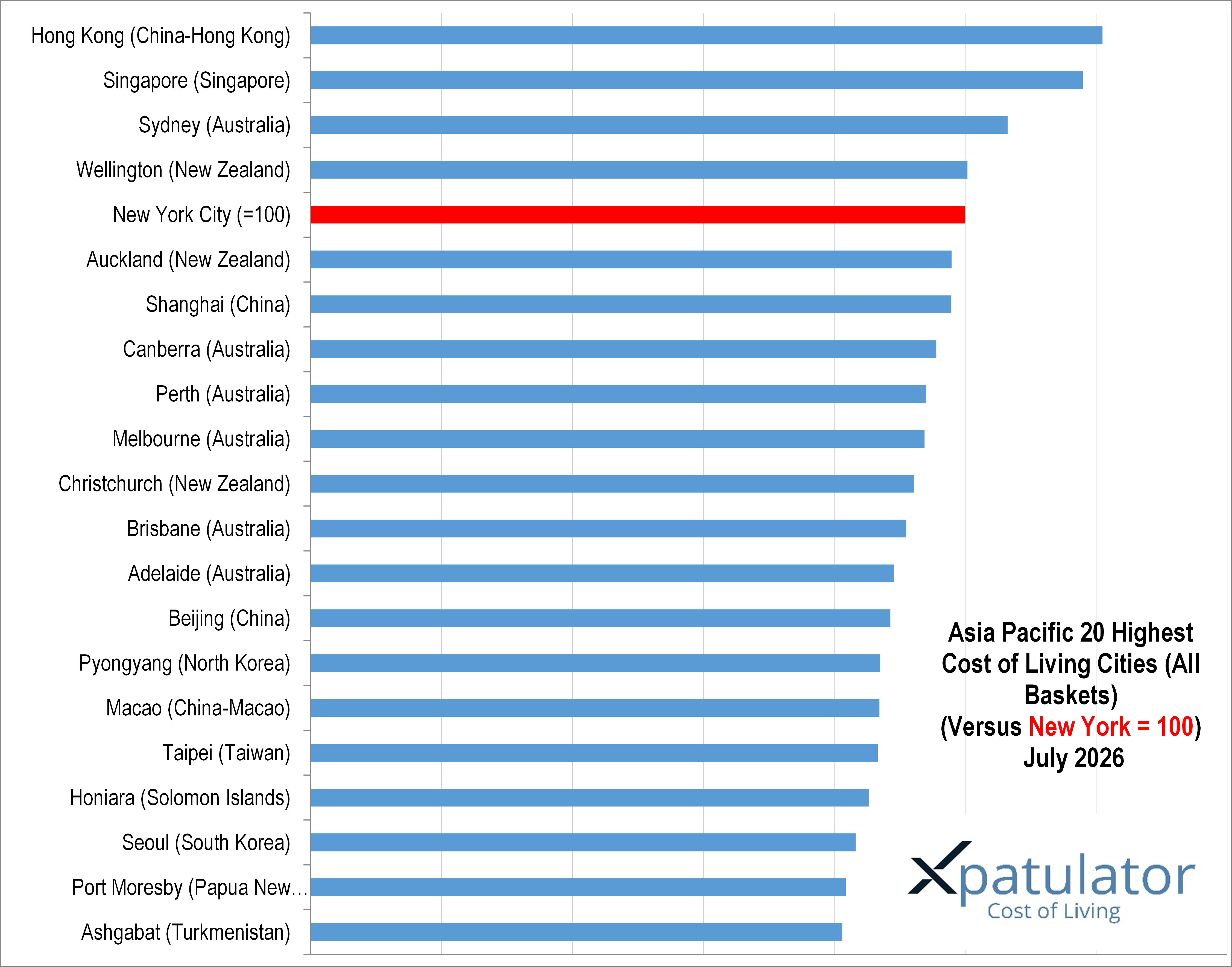
Wellington and Auckland remain high by regional standards because New Zealand is a smaller and more remote market. Distance, freight costs, housing pressure, utilities and imported goods can all affect the expatriate basket. A weaker currency may reduce some converted costs, but it can also increase the local price of imported items.
Shanghai, Beijing, Macao, Taipei and Seoul each show a different cost pattern. The headline index can be lower than Hong Kong, China or Singapore, but expatriate costs rise quickly where the household requires premium housing, private healthcare, imported groceries and international schooling.
Honiara, Hagatna and Port Moresby illustrate the cost of distance and limited supply. Secure housing, private transport, reliable utilities and imported goods may matter more than ordinary local consumer prices.
The main lesson for expatriates is that salary offers should not be assessed using gross salary alone. Rent, healthcare, education, transport, groceries, utilities and personal services can absorb very different shares of income depending on the host city.
Exchange rates and inflation add another layer. If the home salary currency weakens against the host spending currency, purchasing power can fall even when the salary has not changed. If imported goods rise in price, the expatriate basket may become more expensive even when national inflation appears moderate.
For employers, cost of living data helps create fairer and more consistent assignment packages. It helps identify whether housing support, schooling support, transport support or a cost of living allowance is needed.
Xpatulator’s Salary Purchasing Power Parity Calculator helps compare home and host locations and estimate the salary required to maintain a comparable standard of living.
Use Xpatulator’s Cost of Living Calculators and Tools to support better decisions on Asia Pacific relocation, salary purchasing power and international assignment packages.


