
Europe’s cost of living data during the third quarter of 2026 presents an apparent contradiction. Many leading cities became less expensive in international comparisons, while inflation accelerated.
Xpatulator’s data as at 1 October shows Zurich’s Cost of Living Index falling from 118.4 in July to 115.5. Geneva declines from 110.3 to 107.5, Oslo from 108.2 to 105.4, Copenhagen from 100.5 to 98.1 and London from 101.4 to 99.5.
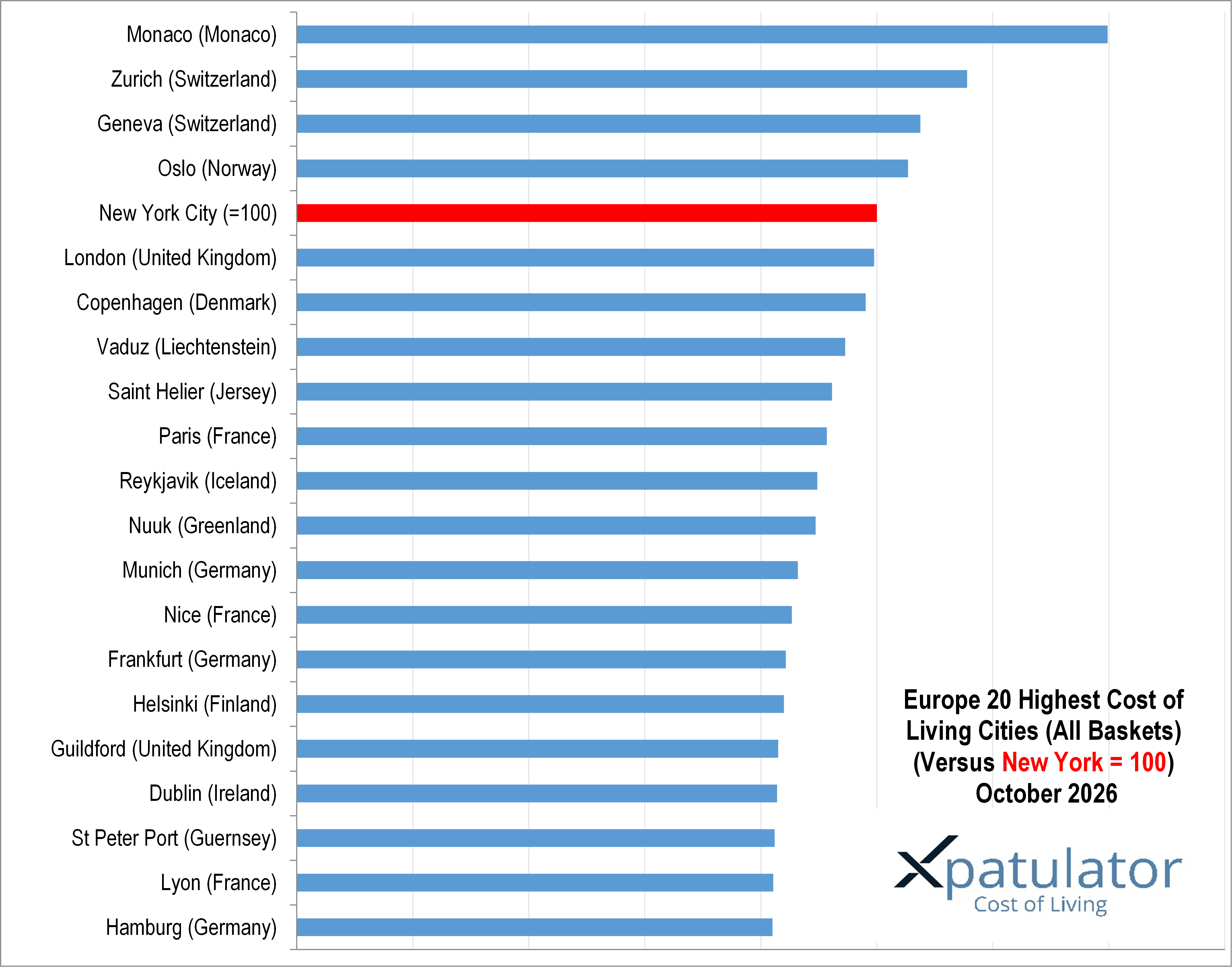
Yet euro area inflation increased to 3.8 per cent in September from 3.2 per cent in August, mainly because of higher energy and food prices. European households were therefore not generally experiencing falling prices.
The explanation lies partly in currencies. Cost of living comparisons between countries require local expenditure to be converted into a common basis. By late September, the United States dollar had reached a 16 month high against the euro and Swiss franc. Sterling was also near a three month low against the dollar.
For an expatriate earning United States dollars, a weaker European currency can therefore reduce the dollar cost of rent, transport and services. For a locally paid employee, however, the same currency weakness can increase the cost of imported fuel, food and other goods. The two employees can experience the same economy very differently.
Housing adds another complication. Zurich had only 252 vacant homes in June 2026, equivalent to 0.11 per cent of its housing stock. Geneva’s vacancy rate was 0.31 per cent. London’s average private rent reached 2,332 pounds sterling a month in August and was still increasing by 3.5 per cent a year.
This is why headline inflation does not provide a sufficient basis for deciding whether an international salary offer is competitive. Inflation measures changes in prices within an economy over time. A cost of living comparison asks a different question: how much does it cost to maintain a comparable standard of living between two locations?
Xpatulator addresses that question through 13 expenditure baskets weighted according to typical expatriate spending patterns. Accommodation carries the largest weighting at 30 per cent, making housing decisions particularly important for international assignments.
Dublin also demonstrates why rankings need care. The city rises 7 places to 17th between July and October, but its Cost of Living Index actually falls from 83.5 to 82.8. Its ranking improves because several competing European cities declined by more. A rising rank does not necessarily mean prices rose.
For anyone considering a move, the more useful question is therefore not whether the proposed salary is higher than the current one. It is whether the new salary will purchase an equivalent standard of living after housing, transport, groceries, healthcare, education and other relevant costs are taken into account. Xpatulator’s Salary Purchasing Power Parity Calculator provides a structured way to make that comparison.


