EXPATRIATE: TOP FIVE MOST EXPENSIVE LOCATIONS PER REGION

EXPAT COL Rankings January 2015

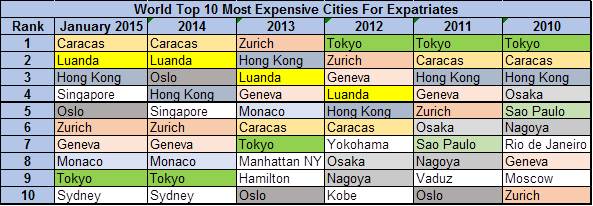
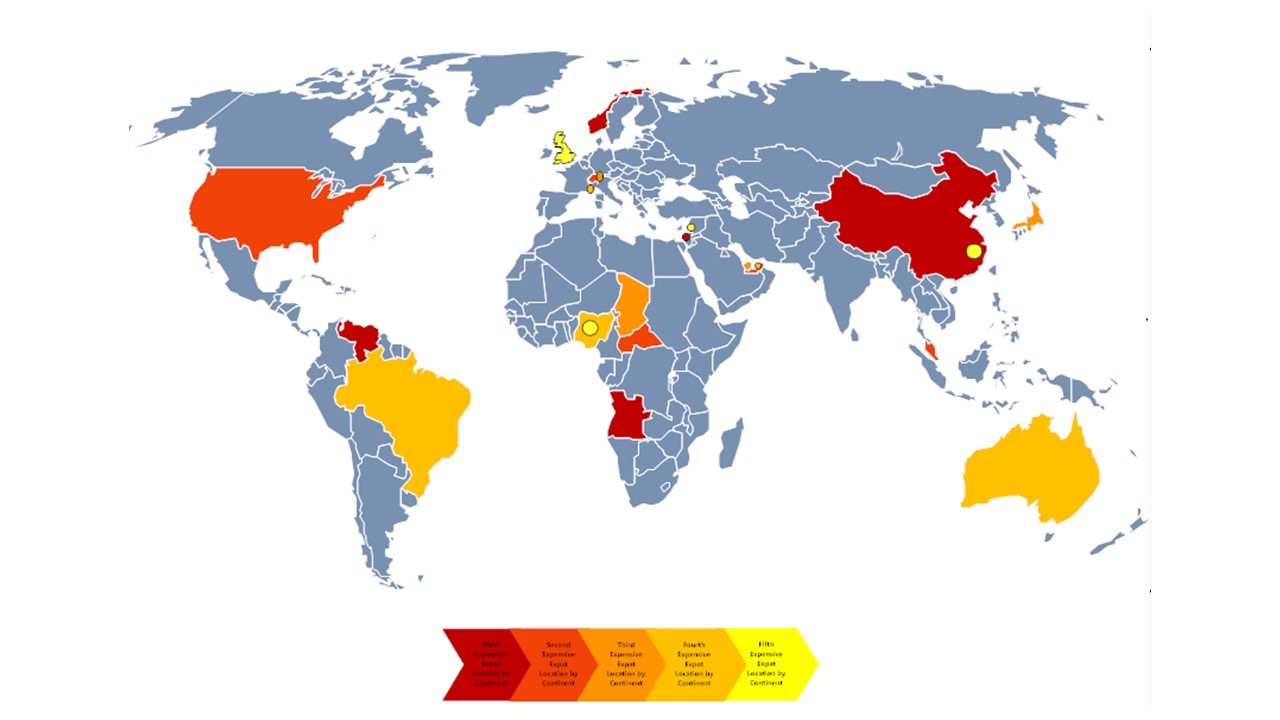
The top five most expensive places to live as an expat worldwide are Caracas, Luanda, Hong Kong, Singapore and Oslo. What about the most expensive per region?

Top five most expensive locations per regions:

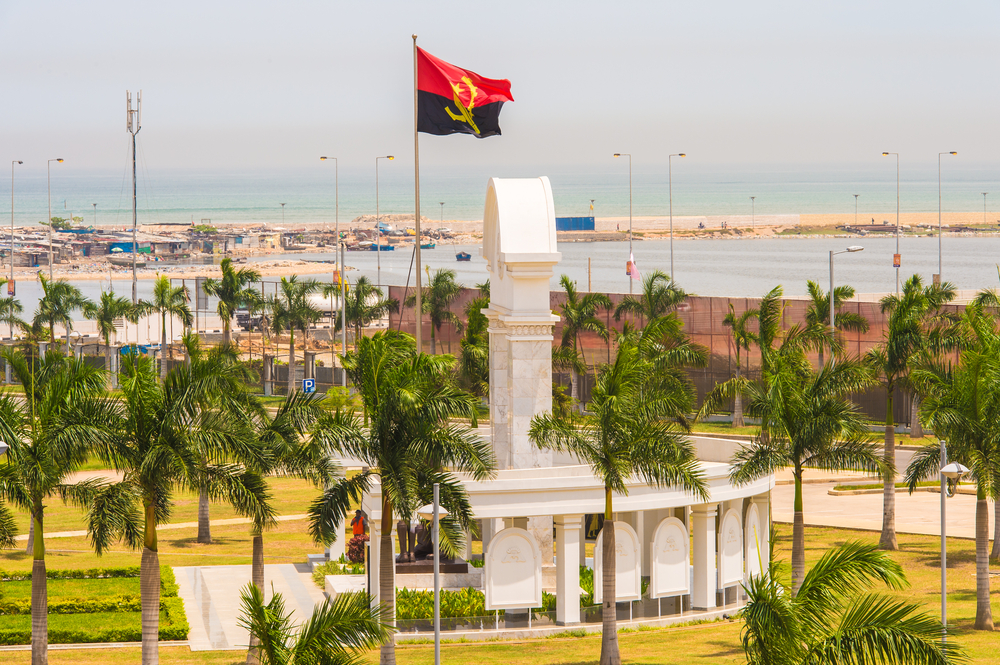
Africa Luanda, Angola
Bangui, Central African Republic
N’Djamena, Chad
Lagos, Nigeria
Abuja, Nigeria
America Caracas, Venezuela
Manhattan NY, USA
Hamilton, Bermuda
Sao Paulo, Brazil
George Town, Cayman Islands
Asia Pacific Hong Kong, China
Singapore, Singapore
Tokyo, Japan
Sydney, Australia
Shanghai, China
Europe Oslo, Norway
Zurich, Switzerland
Geneva, Switzerland
Monaco, Monaco
London, UK
Middle East Jerusalem, Israel
Abu Dhabi, UAE
Doha, Qatar
Dubai, UAE
Beirut, Lebanon

This article may be freely copied as long as reference is made to http://www.xpatulator.com/ 

Posted in Uncategorized | Tagged , , , , , , , , , , , , , , , , , , , , , , , , , , , , , | Comments Off on EXPATRIATE: TOP FIVE MOST EXPENSIVE LOCATIONS PER REGION

January 2015 Cost of Living Rankings Out

The latest quarterly cost of living rankings published by Xpatulator.com place Caracas as the most expensive city to live in as an expat once again.   The survey which covers 780 locations (countries and cities) across 5 continents and measures the comparative cost of over 200 items in each location places Luanda second, Hong Kong third, Singapore fourth and Oslo fifth most expensive cities.

The Top Ten Rankings are as follows:

Cost of living rankings for January 2015

Xpatulator.com’s Top Ten Cost of Living Ranking Comparison

For the full cost of living ranking listing go here.

This article may be freely copied as long as reference is made to http://www.xpatulator.com/ 

Posted in International Cost of Living | Tagged , , , | Comments Off on January 2015 Cost of Living Rankings Out

International Cost Of Living, Hardship and Expat Pay: An Expat in Myanmar


Thinking of becoming an expat in Myanmar, get a little advice before you set out on your adventure. It is not just the culture that may be different but the cost of living as well….
http://bit.ly/1qkREwq

Posted in Uncategorized | Tagged , , , , | Comments Off on International Cost Of Living, Hardship and Expat Pay: An Expat in Myanmar

Kenya Cost of Living: Expatriate Cultural Tips, Risk Rating, Tipping and More…

Kenya cost of living

Kenya

Kenya is a country of diversity, where within its borders are you will find the rich savannahs where big game roam, where cultures are unchanged by the modern world, pristine beaches and coral reefs stretch the coastline, equatorial forests and mighty snow-capped mountains can be found in contrast to the searing deserts and cool highlands.

Kenya can be found in the Eastern part of Africa, bordering the Indian Ocean, between Somalia and Tanzania.

And although known for its African Safari Tourism, if you are travelling there or deciding to become an expat, here are some pointers on safety and culture.

  • Kenya’s overall risk rating is MEDIUM
  • It is HIGH for Nairobi, as well as the Northern Districts of the Rift Valley (north-west of Isiolo), North-Eastern districts (north-east of Isiolo), Coastal areas (north of Malindi) and North-Eastern provinces.
  • EXTREME TRAVEL RISKS  are issued for the remote border regions with Somalia in the North-Eastern province.
  • Road safety, crime and terrorism are the greatest risks to foreigners, while violent and petty crime poses the most significant security risk in urban centres, especially the capital Nairobi, where local police protection is inadequate.
  • The risk of unrest increases during national political events, including elections and national referenda and these threats increase when they are spontaneous or orchestrated and lead to rioting.
  • When there is political unrest security crackdowns become heavy handed, there are vigilante roadblocks and possible increases in opportunistic crime. Foreigners are likely to be at risk of exposure to incidental violence.
  • Inter-communal unrest can be triggered by political developments related to the status of Islam in Kenyan society. Al Shabab, the Somalia-based Islamist terrorist group, has threatened attacks against Kenya.
  • Concerning is the capacity of the security forces to deal with terrorist threats, despite the authorities’ close co-operation with international anti-terrorism efforts.

General Tips

  • Introductions in Kenya are formal, eye contact is an important way to establish trust and staring is not considered rude.
  • Pointing and counting on fingers can be considered impolite.
  • Ask permission before photographing Kenyans and do not photograph the military, police, official buildings or embassies, as you may be detained.
  • Smoking in public places is illegal, other than in designated smoking areas, violators may be fined or imprisoned.
  • Before and after eating a meal, people are expected to wash their hands in a bowl located to the left of the table.
  • Use the right hand or both hands when receiving or giving an item to another person, the use of the left hand alone is considered rude.
  • Kenya does not have any strict dress code, but the coastal regions have a significant Muslim population and modest dress is advised, particularly in Mombasa. Women do not wear sleeveless dresses or blouses and shorts are only worn by children, elderly men and tourists.
  • Public displays of affection are considered unacceptable.
  • Homosexual activity is punishable with up to 14 years in prison. Homosexual personnel are advised to exercise discretion to avoid any unwanted attention or even deportation, though they are unlikely to be imprisoned.
  • Kenyans are proud of their national products, such as food and local meats, as well as their cultural heritage.

Business Tips

  • Business in Kenya tends to be conducted formally and conservatively.
  • Business dress is formal, lightweight suits are most commonly worn, with a jacket and tie.
  • Handshakes are the customary form of greeting upon both business introductions and departures.
  • Offices and businesses generally close at least an hour for lunch.
  • Make appointments in advance.
  • Punctuality is important, even though your host may be late.
  • The pace of business may be slow, be patient and expect delays.
  • Most business is conducted in English and business cards are customarily exchanged.

Businesswomen

  • Female travellers should be alert to the increased risks and adopt sensible security precautions as a routine measure, due to the high level of abduction and rape.
  • The majority of attacks are conducted at night against lone female travellers in dark streets and beach areas, unauthorised taxis or in the vicinity of nightlife areas. Remain vigilant in such areas and endeavour to book your taxis through the hotel or a trusted local third party.
  • Female travellers are advised to prioritise security concerns when selecting accommodation. Lone females relocating for the medium-to-long term should reside in a secure complex where possible.
  • Adopt sensible pedestrian security measures; avoid walking unattended in isolated areas and desist from walking outside of secure locations after dark.
  • Avoid giving away personal information to unfamiliar people, including full name, contact details and any address where you might be staying, visiting or working.
  • Be particularly alert in restaurants, bars and nightclubs. Never leave a drink unattended or accept drinks from strangers.

Tipping is not customary in Kenya, however a 10% service charge may be added to the bill in more upmarket restaurants. Otherwise small change in local currency may be offered to taxi drivers, porters and waiters. However, on safari, drivers, guides and cooks often rely heavily on tips, but these are discretionary.

Working Week

  • Business hours Monday to Friday :09.00 to 13.00 and 14.00 to 17.00
  • Some businesses close on Fridays and Saturdays
  • Banking hours Monday-Friday: 09.00-15.00


Xpatulator.com provides up-to-date cost of living data for over 700 locations worldwide, employers and employees can calculate how much is needed to earn in another location to have a similar spending power. Steven McManus is a Remuneration and Benefits Consultant and founder of  http://www.xpatulator.com

Posted in Uncategorized | Tagged , , , , , , , , | Comments Off on Kenya Cost of Living: Expatriate Cultural Tips, Risk Rating, Tipping and More…

Myanmar – What Culture are you stepping into?


Myanmar cost of living, expatriate Myanmar, expatriate living, mobility, salary, culture, tips, risk

Yangon, Myanmar

Found in South East Asia, Myanmar (Burma) borders the Andaman Sea and the Bay of Bengal, between Bangladesh, India, China, Laos and Thailand. Continue reading

Posted in Expatriate Relocation, Myanmar | Tagged , , , , , , | Comments Off on Myanmar – What Culture are you stepping into?

Expat China: Risk, Culture, Working Hours and Language

As an expat moving to a country outside of your own culture, the prospect can be quite daunting.  However if you have information your require on what to expect, a little bit of courage and lots of drive anything is possible.

International cost of livingWhat is the RISK RATING for China?

This is generally LOW, however it is MEDIUM for Non-central districts of cities in the Guangdong province; and the remote border areas of Xinjiang Uighur Autonomous Region (XUAR)

Crime itself is of a petty nature and poses the main risk, specifically in crowded areas such as markets and train stations, and confidence tricks, ranging from basic tourist scams to more elaborate commercial ones do occur.

Actual violent crime against foreigners is rare, but not unheard of against Ethnic-Chinese visitors, regardless of nationality.

What are the General Cultural Tips you should try to stick to?

1. It is customary to arrive slightly early for social engagements.

2. When dining in a restaurant, it is inappropriate to discuss illness, death or tragic events as it is seen as bad luck.

3. Restaurants usually close by 21.30, therefore expect to eat between 19.00 and 20.00.

4. It is a customary during a meal that conversation should focus on giving compliments to the chef.

5. Food is often eaten with the hands and rice bowls are lifted to the mouth.  Spitting phlegm during meals is common and is an accepted practice not intended to be discourteous.

6. Foreigners will be expected to use chopsticks and asking for a knife and fork may be considered insulting, read the situation before deciding what to do.

7. Superstition is taken seriously.

  •  Four is an unlucky number associated with death. Some people will go to extraordinary lengths to avoid having the digit in their telephone number or address.
  • Eight is a lucky number that is associated with wealth.

8. Do not use exaggerated gestures or facial expressions as the Chinese do not typically use these while speaking, and may find them distracting when used by others.

9. Gift giving is somewhat ritualized and is important.

  • Avoid gifts of great value, as they may embarrass a Chinese person and may be declined.
  • Smaller tokens, such as souvenirs from your country, are seen as expressions of friendship and symbolize hope for success.
  • Red or gold wrapping paper is appropriate, while black and white are colors of mourning.
  • People may often decline a gift several times before accepting it, they are being customarily polite, be persistent until they accept.
  • It is customary to bring a gift when invited to someone’s home such as fruit, candy or a souvenir from your home country.

10. Do not discuss politics as these may be sensitive, e.g. China considers Taiwan as its province and not a country;  avoid criticism of China, its policies or leaders.

11. Photography is not allowed in airports or government buildings.

What about Business Cultural Tips?

1. Introductions are usually quite formal, the Chinese traditionally nod or bow slightly when greeting, however handshaking is also common and appropriate.

2. If greeted by the somewhat uncommon custom of applause, the appropriate response is to applaud back.

3. Business Cards:

  • It is advisable to have business cards printed in both English and Chinese as these are usually exchanged upon introductions, have a large supply handy.
  • Read the card you are given carefully before placing it on the table during a meeting.
  • Never write on a business card or put it in your wallet or pocket.
  • Carry a small card case.
  • Do not put cards away until the end of the meeting.

4. Use both hands to both present and receive cards.

5.  Chinese surnames always form the first part of the name, e.g. Hu Jintao is Mr Hu.

6.  Make appointments in advance.

7. Punctuality is very important in China for both business and social engagements.

8. When referring to the nation on formal documents or speeches, it is appropriate to use the full title: The People’s Republic of China.

9. Business dress is conservative:

  • Men should wear a suit and tie.
  • Women should wear either a dress or a skirt and blouse.
  • Avoid low necklines or skirts above the knee.

10. Business is not generally discussed over a meal.

11. If you are invited to a banquet during your stay:

  • These are often extremely lavish, involving many courses and considerable alcohol.
  • Formal meals will often be accompanied by a series of toasts to the call of ‘Gan Bei!’ (Finish your glass!).
  • Foreign guests could be expected to return the toast.
  • It is also polite to invite the host or hostess to a return dinner – preferably in a hotel.
  • If hosting a banquet, pay close attention to the seating plan, which should reflect the hierarchy of the guests’ organisation.

12. Open displays of emotion are frowned upon particularly in business circles:

  • If a foreigner becomes angry, their Chinese counterpart may react by laughing.
  • This has nothing to do with humour or ridicule.
  • It is one way of maintaining self-respect (‘face’).
  • Loss of face can be humiliating.

Businesswomen

There are no specific risks for female travellers or businesswomen. However, all women are advised to follow commonsense security precautions such as:

1. Observe and respect local clothing customs.

2. Plan your itineraries bearing in mind risks incurred by women in various modes of transport available in your location; prioritise security in your choice of transport.

3. Do not travel on public transport after dark without a known male companion.

4. Be prepared to ask trusted contacts to accompany you to your car, a taxi or your hotel after dark.

What should you tip in restaurants and hotels?

Tipping is not officially allowed, but is becoming increasingly common. Restaurants and hotels may include a service charge of 10-15% in the bill. Taxi drivers do not expect to be tipped.

Working hours

Working week: Monday to Friday

Government departments, banks and private offices: 09.00-17.00/18.00, though some close between 12.00 and 14.00

The Official Language is : Mandarin, known locally as Putonghua.

It is spoken in business circles even in southern China, where Cantonese is the vernacular. Chinese business people are increasingly learning to speak English, but in many cases, an interpreter is required. English is not widely spoken outside business circles.

Enjoy your stay….

Xpatulator.com provides up-to-date cost of living data for over 700 locations worldwide, employers and employees can calculate how much is needed to earn in another location to have a similar spending power. Steven McManus is a Remuneration and Benefits Consultant and founder of  http://www.xpatulator.com

Posted in Expatriate Relocation, International Cost of Living | Tagged , , , , , | Comments Off on Expat China: Risk, Culture, Working Hours and Language

China Expat Experience

We have put together expats experiences of different countries. Thinking of moving abroad? Then read our weekly blog from expats living around the world.Nats01

Natalie Cossavella living in China

Where are you originally from?
I’m from South Africa

Is this your first expat experience? If not where have you lived before?
No, I lived in Ireland for 12 years.

Where are you living now?
I now live in Wuxi, China.

How long have you lived here for?
I’ve lived here for 10 Months.

What was your first impression of the city / country you moved to?
It was definitely not what I had expected. It’s a lot cleaner and not as shocking as I would have thought. Maybe a hint of disappointment as I was looking for a shock factor.

What do you like the most about where you are living now?
That I get to travel around Asia and it’s so affordable!

What do you like the least about where you are living now?
That I don’t think I’ll be able to become accustomed to the culture. I have a lot of patience but I don’t think it’s enough to extend my stay over a year.

What do you do for fun?
Travel or Socialise or both!

What is the funniest / strangest cultural experience you have had?
Seeing a mother helping her daughter use the public road, in the city, as a toilet. I had to laugh at this but that’s more shocking than funny really (they do specially make children’s pants with a gap at the bum area). This has happened more often than not and worse when it’s an adult.

How did you find the cost of living compared to your home? More or less expensive? Why?
Much cheaper!! Except if you would like to buy quality food and clothes, they generally add up to roughly the same. In China you can barter down prices.

Did the company help with your move? How?
Yes. They helped me find accommodation as well as sorted out all the legal documents i.e. Visa process and were readily available on Skype and email before I left.

Does your company pay for any of the following –
Clothing – No

Communication (e.g. Internet; Telephone) – No

Education (e.g. Children’s School Fees) – No

Furniture & Appliances (e.g. Semi-Furnished Housing) – No

Groceries – No

Healthcare (e.g. Medical Insurance; Medical Facilities) – No

Household Accommodation (e.g. Housing or Housing Allowance) – No

Personal Care – No

Recreation and Culture (e.g. Fitness Club Fees) – Yes

Restaurants, Meals Out and Hotels – Yes

Transport (e.g. Company Vehicle or Transport Allowance) – Yes

Air Fare Home each year – No

What does your company not pay for that you feel it should pay for?
Chinese Lessons. It has taken over 6 months for one of our Chinese Teaching Assistants to offer her free time for us. Where the school should have more of an interest to help their foreign staff learn the local language. This will help tremendously with communication with the Chinese staff and just a general helping hand.

Did you do research before your move on what you needed to earn to maintain or increase your standard of living?
Yes I did but only what I thought was enough as the company provided me with as much information that I needed. (In the end, not quite what they say, but generally they were ok).

If so, what research did you do?
Google, Skype calls, emails to people that had already been there and spoke to a friend that was living in the country at the time.

What do you find expensive in your Host city?
Fruit and all western stores, which is fair enough. Other than that, it’s very cheap all around.

Do you have any advice for readers on becoming an expat and the type of research to do before hand?
I came with the mind set of experiencing things first hand, more than to research thoroughly. I think the only thing you need to think about is are you willing to adjust to possibly a completely different and maybe even difficult way of life? I’ve been very lucky with all the places I’ve lived but China being my first solo trip, I do wish I read up more about the current lifestyle and not the historical side. I came here to travel, so it all depends what reasoning you have behind moving. The one thing that is very important is that you need to be willing to ask questions, adapt, befriend strangers and take risks but be street smart.

Any favourite websites / blogs about where you live, that can help others with their move?
There’s nothing fantastic that I found about China but just a general traveller’s blog, that I love to read is: http://www.nomadicmatt.com/

Do you have a blog or website?
A private one only that’s been very neglected unfortunately.

Nats02

Xpatulator.com provides up-to-date cost of living data for over 700 locations worldwide, employers and employees can calculate how much is needed to earn in another location to have a similar spending power. Steven McManus is a Remuneration and Benefits Consultant and founder of http://www.xpatulator.com
Posted in cost of living, International Cost of Living Rank; International Cost of Living Index | Tagged , , , , | Comments Off on China Expat Experience

Angola, Chad Still Tops in Africa

international cost of living rankings

The Capital City of Angola remains at the top of the list for most expensive locations for expats in Africa according to Xpatulator.com, the world’s leading cost of living information provider and calculator for the management of assignments for employees around the world.

Chad, N’Djamena remains 2nd, after joining the World’s top ten most expensive cities in the second quarter of this year.

Read more….

Posted in cost of living rankings | Tagged , , , , | Comments Off on Angola, Chad Still Tops in Africa

Caracas in Venezuela Once Again Tops List of Most Expensive Cities in the Americas and The World

international cost of living rankings

Caracas has overtaken Luanda as the most expensive expat destination in the Americas and worldwide. The anticipated fall in cost of living in Venezuela has not happened, while the parallel exchange rate continues to exist it is not widely available.

Read more….

Posted in cost of living rankings | Tagged , , , , | Comments Off on Caracas in Venezuela Once Again Tops List of Most Expensive Cities in the Americas and The World

Moscow Moves Down and London Up in the Rankings for Europe

Moscow, Russia fifth most expensive city in EuropeNew cost of living data shows that Moscow has moved down the rankings and London up; while Oslo, Zurich and Geneva remain fixed as most expensive European cities for foreign workers.

Read more….

Posted in cost of living rankings | Tagged , , , , | Comments Off on Moscow Moves Down and London Up in the Rankings for Europe