
Xpatulator Cost of Living Rankings – Luanda Tops the List as most expensive city to live as an expatriate for first quarter 2014

Xpatulator Cost of Living Rankings – Luanda Tops the List as most expensive city to live as an expatriate for first quarter 2014

Travel Guides (Photo credit: Vanessa (EY))
And by essentials I mean they’re completely optional. We all travel differently and have varying expectations and goals for our excursions. Some of us have embraced technology and the age of social media and [over] sharing and others like to keep things decidedly simple, or at least as simple as travel. However, for those who have embraced technology and are looking for ways to keep in touch with home, there are several ways to go about doing just that. In fact, there are five major ways you, the social traveler, can maintain communication with home and the world.
While a travel blog is certainly not for everyone, it’s a fun and engaging way to keep family, friends, and—if you have any—internet followers. Blogs are a great alternative to journals because, not only can other people read them (which may cause you to hold back certain, ahem, “details”) but you can also incorporate pictures into your posts creating a highly visual experience allowing your readers to follow you on your journey. Of course, if writing isn’t something you want to put time into, you could make it strictly a photo blog. The problem with blogging, as highlighted in the last sentence, it the time requirement, you have to write and keep it up, otherwise there really isn’t a point.
The time investment of keeping a social media presence is less than keeping a travel blog, but it still can be fairly intensive, depending on how much you actually want to put into it. You can keep a low or a high profile, choosing whether or not you engage people. You can effectively use some social media sites in place of a blog, or you can offer mini updates through a site such as Twitter, or update a photostream on Flickr.
If you still want to be able to call home, having a cell phone capable of dialing internationally is a must. US travelers may need to check with their phone provider to see if their phone will work internationally. If it doesn’t, you can take the necessary steps to render the phone capable of international calls (which, depending on the phone may require unlocking and a new SIM card) or you can purchase a new phone at your destination, which is generally an inexpensive route to go.
If you do decide to pick up a new phone, you may need to pick up an international calling card to keep service charges and fees in control, since fees to call to various international destinations vary wildly, usually toward the ridiculously expense end of the cost spectrum. Like cell phone plans, calling cards come in a variety denominations and it’s usually best to pick up smaller denominations to avoid wasting money and minutes you may never use, depending on your calling habits.
When you have regular internet access, using a phone, either cellular or landline, might not even be necessary with all the voice-over internet protocol (VOIP) services out there. You can maintain contact, either voice or visual/voice, and it’s a great way to keep in contact for cheap, but at the same time you will need a stable and fairly decent internet connection.
About the Author: Andrei Milosevic is an international student, traveler, and writer. Over the past few years, he has been studying international business and providing advice and insight into making international calls. In his free time he kayaks and Skypes with his best friend back home in Serbia.
 We have changed the way in which you purchase from us, instead of buying credits we now have a Subscription Offering. This new method of subscribing represent a substantial saving for our clients compared to our competitors, who either charge a cost per report or charge you according to a quoted consulting fee.
We have kept our costs to a minimum by adopting a fast online service model as opposed to the traditional consulting model. From the beginning, we recognized that providing the fastest, most accurate results required a new kind of service, which Xpatulator.com® provides today. The innovation has paid off in faster response times, greater scalability and lower costs.
Our offerings consist of two subscription types:
A seven day or an annual subscription.
The Seven Day Subscription:
Here we offer you the Home Location for free and each Host Location purchased will cost $75. This allows you unlimited access to the purchased location data for the 7 day period using any of the calculators.
The Annual Subscription:
With this we offer you the Home Location for free and each Host Location will cost $750. The yearly Subscription allows you unlimited access to the purchased location data using any of the calculators for this period.
How do you use Xpatulator.com® ?
Register, purchase locations you want information on and select your subscription type. Then select the calculator/s of your choice to create your reports. A report can be re-run for the period that you have purchased your subscription for. These reports are saved and can be viewed later in your “Report Archive” as PDF’s, online or emailed to your registered email address.

We have so many new exciting additions to our website with our new design, the question is where to start?
Xpatulator.com has been redesigned for your convenience. The new user interface introduces an easier-to-use functional menu structure, and superior usability on mobile devices.
 Zurich in Switzerland is ranked as the overall most expensive city to live in, world-wide, according to Xpatulator.com’s October 2013 international cost of living rankings. While Angola is the most expensive country.
Hong Kong has moved up one place to become the second most expensive place for expatriates to live. The major contributor is the cost of accommodation in Hong Kong. If the housing, education, medical and transport cost of living baskets are excluded, Hong Kong drops to 135th most expensive place in the world. In other words, if these expenses are excluded, Hong Kong is not a particularly expensive place to live.
Luanda has dropped one place to become the third most expensive place in the world for expat’s to live. While accommodation is fifth most expensive in the world, the major contributors to Launda being so expensive is the cost of groceries, restaurants, meals out, hotels, and clothing. If the housing, education, medical and transport cost of living baskets are excluded, Luanda is the most expensive place in the world.
Tokyo has dropped a further 3 places in October, having dropped 2 places in April, and 3 places in July to become the ninth most expensive place to live, while Geneva remains the fourth most expensive location in the world.
Thimphu in Bhutan, is ranked the cheapest.
Key Highlights:

Africa:
The most expensive countries in Africa are: Angola; Nigeria; Mozambique; Democratic Republic of Congo; and Ghana. The most expensive cities to live in are: Luanda (3rd most expensive in the world) Abuja; Lagos; Kano; and Ibadan. The cheapest city for expatriates to live in is Tunis in Tunisia (18th cheapest in the world). The biggest mover down the rankings is Windhoek in Namibia, which has dropped from 596th in July to become the 703rd most expensive location in the world. The biggest mover up the rankings is Antananarivo in Madagascar. Antananarivo has risen from 571st in July to become the 343rd most expensive location in the world.
 America:
The most expensive countries in America for expatriates to live in are: Venezuela; Bermuda; Cayman Islands;Montserrat; and Aruba. The most expensive cities for expatriates to live in are: Caracas (8th most expensive in the world); New York (Manhattan); Hamilton (Bermuda); George Town (Cayman Islands); and Sao Paulo. The cheapest city for expatriates to live in is: Managua in Nicaragua (20th cheapest in the world). The biggest mover down the rankings is Asuncion in Paraguay which has dropped from 459th in July to become the 520h most expensive location in the world. The biggest mover up the rankings is San Jose in Costa Rica, which has risen from 427th in July to become the 393rd most expensive location in the world.
 Asia-Pacific:
The most expensive countries in Asia Pacific for expatriates to live in are: Japan; Australia; New Caledonia; Micronesia and French Polynesia. The most expensive cities for expatriates to live in are: Hong Kong (the second most expensive in the world); Tokyo; Singapore; Sydney and Yokohama. The cheapest city for expatriates to live in is Medan in Indonesia (23rd cheapest in the world). The biggest mover down the rankings is Pyongyang in North Korea, which has dropped from 41st in July to become the 155th most expensive location in the world. The biggest mover up the rankings is Port Vila in Vanuatu, which has risen from 175th in July to become the 153rd most expensive location in the world.

Europe:
The most expensive countries in Europe for expatriates to live in are Switzerland; Norway; Liechtenstein; Denmark; and Jersey. The most expensive cities in Europe for expatriates to live in: Zurich (most expensive in the world); Geneva; Monaco; Oslo; and Moscow. The cheapest city in Europe for expatriates to live in is Sofia in Bulgaria (19th cheapest in the world). The biggest mover down the rankings is Konya in Turkey, which has dropped from 156th in July to become the 194th most expensive location in the world.
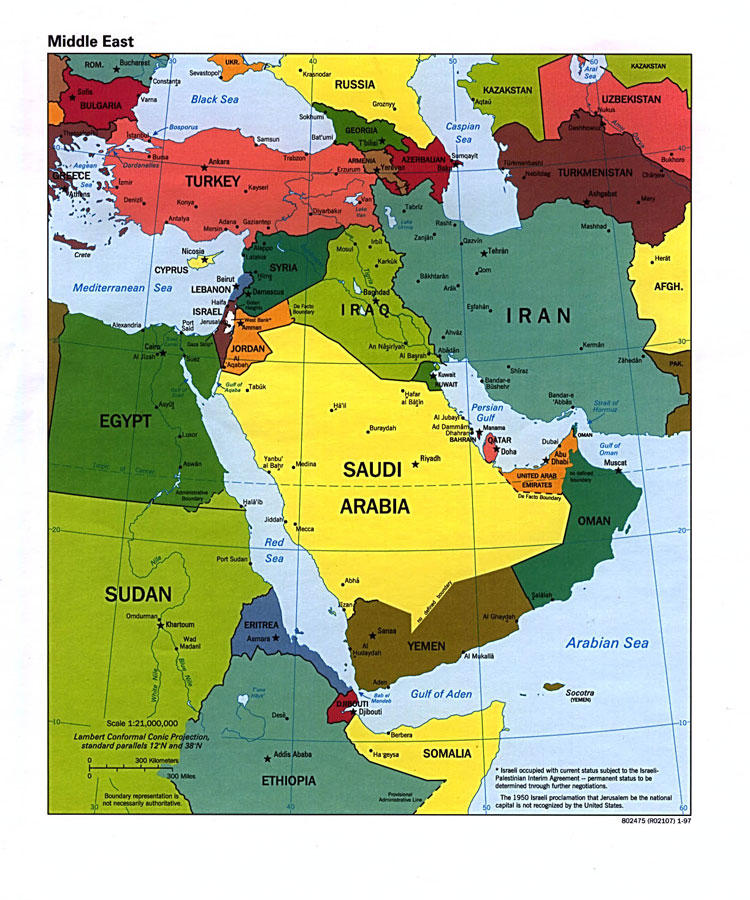 Middle East:
The most expensive countries in the Middle East for expatriates to live in are: Qatar; United Arab Emirates; Israel;Lebanon and Bahrain. The most expensive cities in the Middle East for expatriates to live in: Doha (113th most expensive in the world); Abu Dhabi; Dubai; Jerusalem; and Beirut. The cheapest country and city in the Middle East for expatriates to live in is Damascus (765th cheapest in the world). The biggest mover down the rankings is also Damascus, which has dropped from 513th in July. The biggest mover up the rankings is Muscat, which has risen from 555th in July to become the 461st most expensive location in the world.
 South Asia:
The most expensive countries in South Asia are: Maldives; Sri Lanka; and Bangladesh. The most expensive cities in South Asia in are: Male in the Maldives (349th most expensive in the world); Colombo; and Mumbai. The cheapest city in South Asia is Thimphu in Bhutan (the cheapest city in the world). The biggest mover down the rankings is Kathmandu, which has dropped 54 places since July to become the 739th most expensive location in the world. The biggest mover up the rankings is Kabul, which has risen from 742nd in July to become the 735th most expensive (and therefore 45th cheapest) location in the world.
For the Top 100 listing go here
The cost of living rankings, released every quarter, measure the comparative cost of living for expatriates in 780 locations, covering every country worldwide. The cost of living comparison uses local prices for defined quantities of the same goods and services, converted to a single currency. Sources include local service providers in each location, international service providers, official governmental statistics and global agency data. The data is quality assured and manually checked by Xpatulator Analysts. The prices of similar related items have been grouped together into 13 basket groups and the cost of living index calculated for each basket in each location. The 13 basket groups are the result of extensive research of actual spending habits ensuring the cost of living indexes reflect a reality-based international expenditure pattern.
 Reference
The cost of living ranking information contained in this article is updated quarterly using data collected by Xpatulator.com over the past 12 months. The international cost of living indexes, on which the rankings are based, is only available using Xpatulator.com’s online expatriate calculators that enable users to create personalized cost of living comparison reports which include:
Published by Xpatulator.com on 1 October 2013
This article may be freely copied as long as reference is made to http://www.xpatulator.com/
Organisations spend insufficient time creating a well designed expatriate remuneration strategy and policy. This is dangerous given that the highest employee turnover is at the beginning and end of international assignments, indicating a lack of integration of expatriate pay philosophy with the broader organisational pay philosophy.
The remuneration of expatriates often tends to be a rushed last minute decision due to urgent operational requirements. The resulting implications often only arise after the expatriate arrives in the host country, and when the assignment comes to an end. For example, the post assignment position back in the home country pays less than the expatriate earned on assignment.
Inconsistent treatment of expatriates quickly leads to unhappy expatriates. Once an organisation has more than 1 or 2 expatriates in the field it becomes vital to have a defendable expatriate pay philosophy in place. This philosophy should clearly convey the organisation’s remuneration principles regarding expatriate assignments. An expatriate assignment pay philosophy is intended to provide guidance in the consistent and equitable treatment of all expatriates and forms the basis of the organisation’s expatriate pay policy.
Most large global organisations have over time established a clear policy for remunerating expatriates. This is often a legacy policy, where past practice has become policy. However expatriate pay is a complex area of remuneration with complex issues such as volatile exchange rates, weak and strong currencies, constantly changing differences in cost of living between countries, different tax regimes, as well as the reality that there are attractive and not so attractive countries to work and live in. This is an area where a clear philosophy and an aligned practical policy are required to ensure attraction, fairness, equity, motivation and retention.
Firstly let’s deal with what makes an employee an expatriate. In my view an expatriate is a person working in a foreign country, where they are not permanently resident, on an assignment of typically not more than 3-5 years but is a citizen from another country. There are as many different expatriate pay practices as there are organisations employing expatriates. However we can identify at least four broad approaches to expatriate pay that has emerged as the dominant philosophies underlying expatriate pay.
Salary Build-Up (SBU)
The Salary Build-Up approach uses the current market related home salary as the base for calculating the expatriate package. Home in this case is the country where the employee permanently resides or is a citizen. The purpose of the build-up approach is to maintain internal equity between countries and to equalise the impact of differences between country tax rates. This ensures that expatriates neither lose nor gain as a result of tax treatment in the host country.
The Salary Build-Up approach typically involves deducting hypothetical tax in the home country, and builds on top of the home salary with an international premium (to compensate for hardship experienced), cost living index and the exchange rate to calculate a total net (i.e. after tax) assignment package.
The net assignment package is then “grossed up” in the host country for local tax and other statutory and non-statutory deductions to ensure the net pay assignment package is paid to the expatriate.
Salary Purchasing Power Parity (SPPP)
The Salary Purchasing Power Parity approach uses the principle of putting all expatriates within the organisation on an equal footing regardless of nationality and geographical location. The purpose of the SPPP approach is to ensure parity in the level of the purchasing power of the salary of expatriates doing the same job at the same level in different parts of the world, taking hardship, cost of living, and exchange rate differences into account.
This approach is typically used by global organisations that have a large number of expatriates, who move from one international assignment to another and compete globally for skills. Organisations using the SPPP approach typically establish a single global pay scale which is often by default that of the global headquarters country. The expatriate’s salary is calculated by adding calculated additional amounts for the hardship, cost of living, and exchange rate differential between the global headquarters (home) and the host country.
The assignment package is then taxed in the host country and other statutory and non-statutory deductions made to arrive at the net pay assignment package paid to the expatriate.
Cost of Living Allowance (COLA)
The Cost of Living Allowance approach uses the principle of retaining the expatriate’s home salary and paying an additional separate allowance, primarily for cost of living, but also for hardship based on the differences between the home location and the host location. The purpose of the COLA is to ensure parity in the level of the purchasing power of expatriates doing the same job at the same level in different parts of the world, taking hardship, cost of living, and exchange rate differences into account by paying a cost of allowance to compensate for the differences. At the end of the assignment the COLA falls away.
This approach is typically used by global international organisations that have a large number of expatriates, who move from one international assignment to another and compete globally for skills. Organisations using the COLA approach typically have country level pay scales. The expatriate’s COLA is calculated by adding calculated additional amounts for the hardship, cost of living, and exchange rate differential between the home country and the host country.
The assignment package is then taxed in the host country and other statutory and non-statutory deductions made to arrive at the net pay assignment package paid to the expatriate.
Local Market (LM)
The Local Market approach uses the principle of applying the local (i.e. host country) expatriate market pay rates. In many organisations the policy is to use the better of the Build-Up or the Local Market approaches, to ensure that the assignment package is equitable and competitive in the host market.
Due to the need for market data, the Local Market approach is typically only used where a strong local and / or expatriate market exists in the host country, and reliable salary surveys exist that accurately report the level of market salary for different positions. For example, take an organisation sending an expatriate from an economically poor, relatively low salary market country, to a city such as New York. It is likely that having used the home base salary as the basis of the calculation, that the resulting total assignment package will be significantly lower than the New York Salary Market. This would occur even after adding an international premium (to compensate for hardship experienced), and a cost living amount (to compensate for the higher cost of living in New York) as well as applying the exchange rate. The reason is that the market level of home base salary in an economically poor country is so much lower than the equivalent market salary in New York.
The Local Market approach is typically used in high economic growth and high cost of living countries where demand for skills is high and there are a large number of expatriates comprising many nationalities such as the United Arab Emirates, Hong Kong or Singapore.
In conclusion it is important to ask questions about your current expatriate pay philosophy. Does your current expatriate pay philosophy drive the desired behaviour? Is the current policy and practice aligned to organisational objectives? Does the current policy work for or against the organisation achieving its global objectives?
We recommend a regular review of organisational expatriate pay philosophy in light of what the organisation seeks to achieve and where it operates geographically, whilst ensuring integration with the other pay related strategies of the organisation.
This article may be freely copied as long as reference is made to http://www.xpatulator.com/
Most of us spend much of our time working for a salary. The average person will spend close to 40 years earning a salary of some sort. Do we spend enough time and effort making sure what we get paid is adequate?

People who are in organized labour such as unions, are often made aware of the impact of inflation on their purchasing power, and the value of their benefits, over time. When you work in a profession or trade for a long period of time most people get a sense of what the market pays. This may be from listening to people complain about being under paid or boasting about the new job they just landed. We also get a sense of what the market pays from job adverts in newspapers or online. Increasingly, especially amongst the younger generation, people openly compare payslips while having lunch in the company canteen. These snippets of salary information lead us to feel either adequately paid or more likely under paid. Most of us tend to over estimate our value and as a result feel we do not earn enough. How much is enough? A little bit more?
It is much more difficult to get a sense of how our salary compares when we move to an unfamiliar environment. When you move to a new country, city or state it becomes much more difficult to compare your current salary to what you have been offered because the cost of living will also be different and that affects your purchasing power. If you are offered a salary that is 10% higher, it looks really attractive, but is it really? What if your cost of living was 20% higher? What if you have to pay for items you don’t have to pay for now? What if you have to pay more tax? Of course the opposite could also be true. If you are offered a salary that is 10% lower, it looks really unattractive, but is it really? What if your cost of living was 20% lower? What if you have to pay for less items than you pay for now? What if you have also paid less tax? All these factors make comparing salaries when relocating challenging.
A useful tool to help people who need cost of living information to help them calculate cost of living differences and compare salary purchasing power is the salary purchasing power parity calculator (SPPP) report from Xpatulator.com.
John Hunt, a Financial Manager in Houston, recently had a salary offer from a large multinational headquartered in Dubai. He was pretty happy with the salary offer of $120,000, tax free, as this was equal to his gross salary in Houston. His net (after tax) salary was $92,000 in Houston. In addition he was offered a housing allowance, which with the low rentals in Dubai would be more than adequate. That would mean he could rent out his home in Houston to cover his mortgage. He would also receive medical insurance and an annual return air ticket to Houston and 5 weeks annual leave each year.
Although he was excited about the offer of $120,000 tax free, he was not sure how far that would go in Dubai compared to his net salary of $92,000 in Houston and decided to use the SPPP calculator to see how his offer compared to his current purchasing power.
He had previously registered on http://www.xpatulator.com/ so he logged in using his username and password. He clicked on the “Purchase Credits” menu and within 10 minutes had a credit loaded using PayPal and was ready to run his report. From the “Calculators” menu he choose the Salary Purchasing Power Parity Calculator (SPPP): The SPPP report calculates how much you need to earn in another location to compensate for a higher cost of living, hardship, and the exchange rate, in order to have the same relative spending power and as a result have a similar standard of living as you have in your current location.
John was prompted for a reference for his report to help him identify his reports for future reference. He then selected Houston as the location that he was being relocated from and Dubai as the location that he was relocating to.
Next John selected the basket costs that will he will pay for from his salary and selected Household and Healthcare as provided for by his employer. John read that basket costs that are provided such as in his case, household and healthcare costs, are not included in the cost of living calculation.
John then selected US Dollars as the currency and entered his net salary of 92,000 in Houston so that he could compare this to the net salary offer in Dubai for a more accurate comparison.
Having checked all his selections in the calculator John clicked on “Run Report”. Within a few minutes Xpatulator.com displayed his report. He saved a PDF version and had a look at what the report contained. This is what he learned:
*For the basket he selected (excluding Housing and Healthcare) Dubai is 8.78% more expensive than Houston
*The relative hardship (quality of living) between Houston and Dubai is 10%
*Applying the cost of living difference based on what will be paid from salary, together with the hardship difference, the Xpatulator calculation is as follows:
Home/Current location salary $ 92,000.00
+ Cost of living difference (8.78%) $ 8,077.60
+ Hardship Difference (10%) $ 9,200.00
Total $109,277.60
This means, based on all the above factors, that John would require a net salary of $109,277.60 in Dubai to have the same standard of living as currently enjoyed in Houston on a net salary of $92,000. This salary compensates for the overall cost of living difference of 8.78% and the hardship difference of 10%.
Given the offer of $120,000, John calculated that he would have an increased purchasing power of approximately 9.8% and accepted the job, confident that he would be better off financially, in addition to the better career prospects the new job was likely to bring.
 When comparing the cost of living between 2 locations the difference in the aggregate cost of the selected basket groups are examined in each location using the average reported price in each location for the same quantity of each item. Cost of living is the relative differential in the local cost of the basket groups and the ruling exchange rate between the 2 selected locations. When comparing the cost of living between different locations the objective is to calculate the difference in the cost of living expressed as an index (e.g. dividing the cost of living in Location A by the cost of living in Location B may result in an index of 140).
The cost of living index indicates the difference in the cost of living between the 2 locations. In the above example the index of 140 means that Location A is 40% more expensive than Location B. This would mean that a person who moves from Location B to Location A would need to earn 40% more, to have the same standard of living in Location A as they have currently.
Xpatulator.com offers a Cost of Living Index Calculator (COLI) : Download Demo COLI Report
The COLI report calculates cost of living indexes for the host locations you select using the home location you specify. You can choose from any one of the 13 baskets or you can choose the overall cost of living index. Each new COLI report uses 1 credit ($99) allowing you to choose 1 home location and all available host locations. Recommended for the calculation of 3 or more host location cost of living indexes using your choice of home base city. Typically used by multinational organizations with operations in several international locations for use in managing international assignments.
To get started Register Now.
For more information on Xpatulator.com go here
Basket groups are those items that you need to buy on a daily, weekly or monthly basis. Some of these items are paid for by the employer on an expatriate assignment and others that come out of the employees pocket. Basket Groups such as Accommodation, Transport and Education are often paid for, however if they are not then they can affect the amount that the employee may need to earn on their assignment. When calculating your cost of living when moving from one location to another it is important to take these basket groups into account.
When comparing the cost of living between 2 locations, the difference in the aggregate cost of all the items in each of the 13 basket groups are examined in each location, this is done by using the average reported price in each location for the same quantity of each item. Cost of living is the relative differential of the local cost of the basket groups and the ruling exchange rate between the 2 selected locations. The 13 different basket groups are weighted according to Expatriate expenditure norms and are listed below,
The most expensive countries in South Asia are: Maldives; Sri Lanka; and India. The cheapest city in South Asia is Thimphu in Bhutan (the cheapest city in the world). The biggest mover down the rankings is Male, which has dropped 15 places since April to become the 353rd most expensive location in the world. The biggest mover up the rankings is Kathmandu in Nepal, which has risen from 752nd in April to become the 685th most expensive (and therefor 95th cheapest) location in the world.

making memories
robertsalisbury.com
Just another WordPress.com weblog
Empowering Translators: From Freelancer to Entrepreneur - by the First and (and Now no Longer!) Only Expert on the Marketing of Translation Services
 Expatriate International Cost of Living